
Energy gel without maltodextrin: why it matters and which are the best
If you've spent any time reading energy gel labels, you've probably come across maltodextrin. It's in almost all of them. But a growing number of endurance athletes are actively avoiding it. Why? And what alternatives exist?
What is maltodextrin
Maltodextrin is a processed carbohydrate typically extracted from corn, wheat or potato. It's cheap, easy to produce and has a very high glycaemic index — even higher than pure sugar. That's why it's used so widely in conventional energy gels: it delivers a fast energy spike and is easy to formulate at scale.
The problem is that spike is followed by a sharp drop in blood glucose. And mid-climb or at kilometre 35 of an ultra, that drop is very much felt.
Why maltodextrin can work against you
Beyond the sugar spike, maltodextrin has another issue: it can irritate the digestive tract during intense exercise. When you're running or cycling at high intensity, your digestive system is already under stress. Adding a highly processed carbohydrate can trigger bloating, gas or even nausea — exactly what you don't need mid-race.
This is especially relevant during long efforts: trail runs over 3 hours, long cycling rides, or marathons. The longer the effort, the more pronounced the digestive impact of processed ingredients.
What to use instead of maltodextrin
Maltodextrin-free gels use more natural, gut-friendly carbohydrate sources:
- Rice syrup: more gradual carbohydrate release, lower glucose spike, better digestive tolerance.
- Agave syrup: moderate glycaemic index, fructose-rich, good absorption when combined with glucose.
- Real fruit: provides carbohydrates along with micronutrients and natural antioxidants that support recovery.
- Dates or fruit purée: widely used in natural gels for their complete nutritional profile.
The key is combining glucose and fructose in a 2:1 ratio — this combination allows absorption of up to 90g of carbohydrates per hour without saturating intestinal transporters.
How to spot a maltodextrin-free gel
Read the ingredient list. If you see maltodextrin or any variant, the gel contains it. In natural gels, the first ingredients are typically natural syrups (rice, agave, date) and real fruit.
Terms like "100% natural", "no additives" or "real ingredients" are good signs, though it's always worth checking the full list.
PICO FUEL gels: natural by design
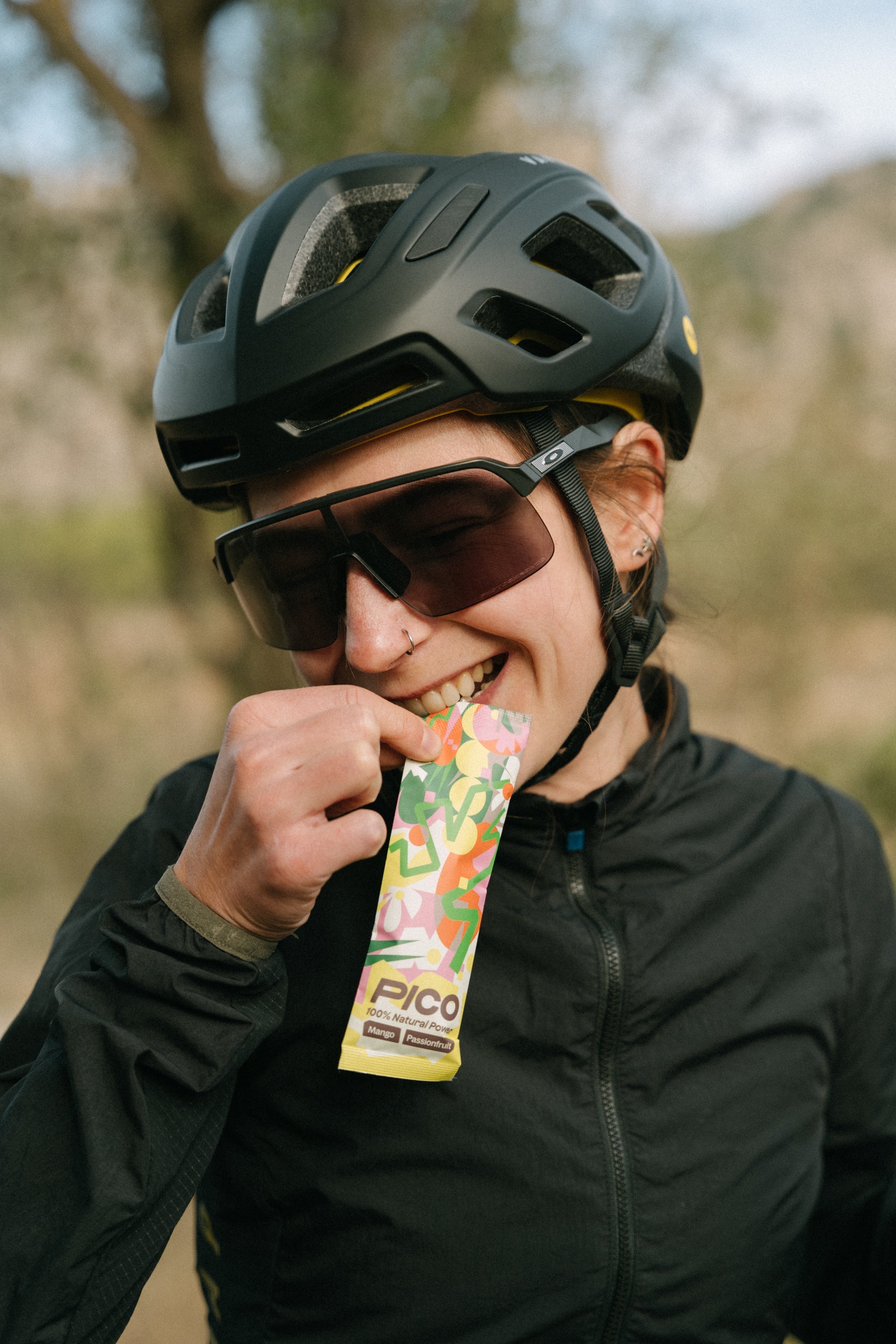
At PICO FUEL we don't use maltodextrin. Ever. Our gels are formulated exclusively with rice syrup, agave syrup and real fruit. The result: a 2:1 glucose-to-fructose ratio, between 41.8g and 47g of carbohydrates per sachet, and zero digestive issues during effort.
Three flavours: Raspberry + Lime, Mango + Passionfruit and Pineapple + Coconut. Each designed by a chef-cyclist so that fuelling well during sport doesn't have to be a sacrifice.
Conclusion
Maltodextrin isn't poison, but if you have digestive sensitivity, tackle long efforts, or simply want to know what you're putting in your body, a maltodextrin-free gel is a smart choice. Your stomach will thank you at kilometre 40.