
Natural vs conventional energy gels: what difference does it make to your body
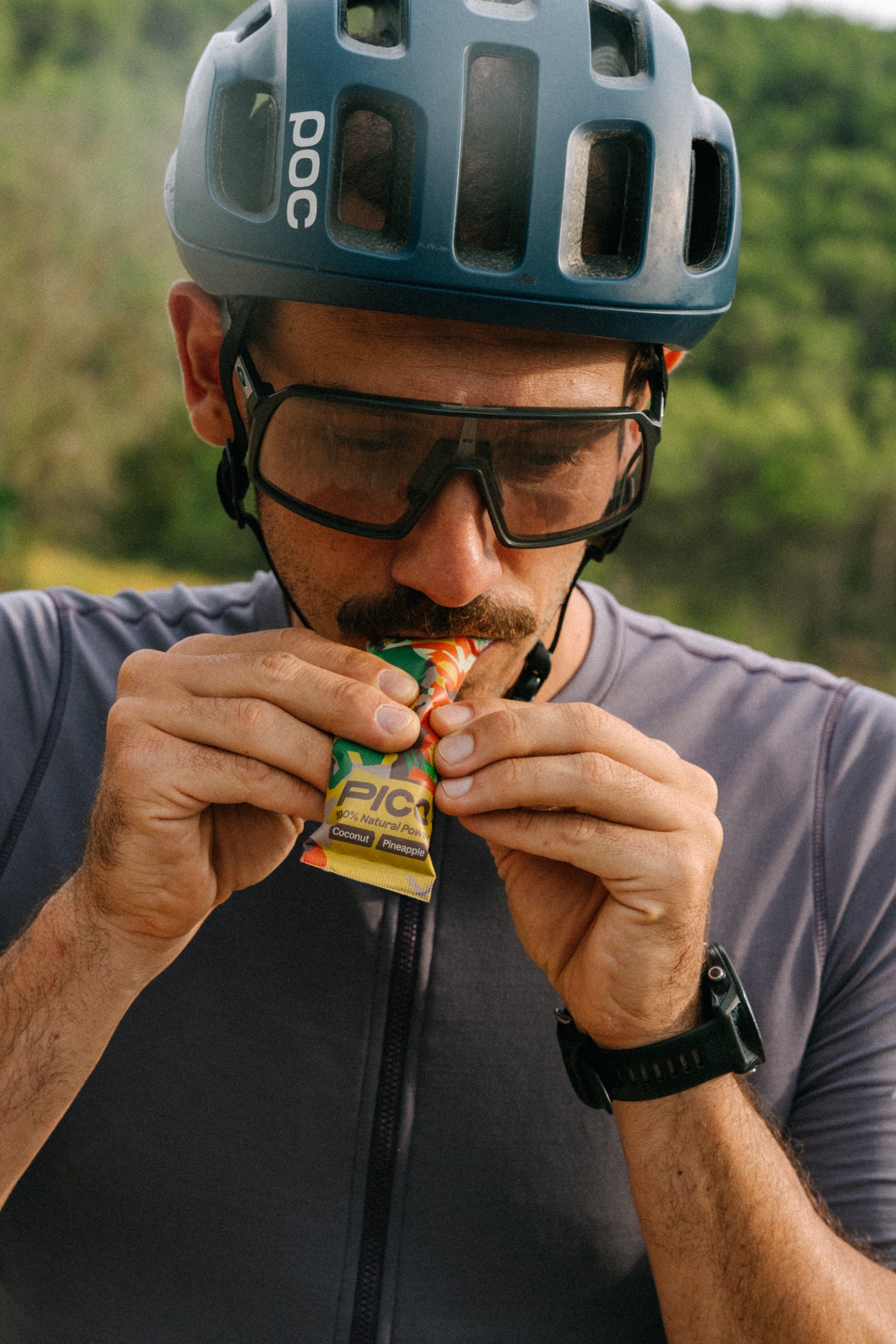
The kilometres are piling up. Your legs are starting to feel heavy, the tank is emptying. You open a gel, knock it back in one go and wait for it to do its job.
But do you know exactly what you just put into your body?
The answer varies enormously depending on whether that gel comes from an industrial sports nutrition lab or a kitchen that works with real fruit. And the differences aren't just philosophical — they have direct consequences for how you feel during and after the effort.
What a conventional gel contains
Most energy gels on the market share a similar base: maltodextrin, fructose, water, preservatives, colourings, artificial flavourings and, in many cases, synthetic caffeine.
It's not that they're dangerous. They're formulated to do their job: deliver fast-absorbing carbohydrates when the muscles need them. And they do.
The problem starts in the details. Industrial maltodextrin has an extremely high glycaemic index — it raises blood glucose sharply, which can be useful in very short efforts, but in long rides or runs it creates spikes and crashes that leave you empty at exactly the worst moment.
Preservatives and emulsifiers, for their part, are the main culprits behind the digestive problems so many athletes experience mid-race. The intestine under effort already receives less blood flow than usual — adding ingredients that irritate it is the perfect recipe for a tough kilometre 30.
What a natural gel contains
A quality natural gel uses carbohydrates from real sources: rice syrup, concentrated fruit juices, dates, agave. The difference isn't just about origin — it's about how it behaves in the body.
Rice syrup, for example, combines glucose and maltose in proportions that the intestine absorbs more gradually. This means more consistent energy, without the initial spike or the subsequent crash. For a 4-hour trail or a long cycling stage, that stability is worth a lot.
Real fruit also provides micronutrients — natural electrolytes, antioxidants, digestive enzymes — that conventional gels don't include or add only in synthetic form. They're not therapeutic quantities, but in the context of prolonged effort, they add up.
And natural flavourings — or the fruit itself — make the gel taste like something real. This matters more than it seems: when you've been out for 3 hours and need to take your sixth gel, having it taste good is the difference between taking it on time or delaying it until it's too late.
Digestion: the most overlooked factor
Athletic performance doesn't just depend on how many carbohydrates you put in — it depends on how many you absorb. And absorption depends on how your digestive system responds.
During intense exercise, the intestine receives up to 80% less blood flow than at rest. In that context, artificial ingredients, preservatives and emulsifiers can irritate the intestinal lining and trigger cramps, nausea or diarrhoea. It's one of the most common problems among long-distance runners and cyclists — and in many cases it has more to do with what they're taking than with the effort itself.
Gels with natural ingredients, free from preservatives and emulsifiers, have a significantly lower incidence of digestive problems. It's no coincidence that many athletes who used to make obligatory pit stops in races stop doing so when they switch to natural gels.
The 2:1 ratio: natural vs synthetic
One of the most relevant advances in sports nutrition in recent years is the 2:1 glucose-to-fructose ratio. The intestine has two distinct transporters for these two sugars, and using them in parallel allows absorption of up to 90g of carbohydrates per hour instead of the 60g from a single channel.
Conventional gels replicate this ratio with maltodextrin and industrial fructose. Natural gels achieve it by combining real sources — rice syrup (glucose + maltose) with fruit juices (natural fructose). The physiological result is virtually the same. The difference is what comes in the package: in one case, an additive lab; in the other, fruit.
Is the price worth it?
The price difference between a conventional gel and a natural one is usually 1 to 2 euros per unit. In a race where you take 6 gels, that's a difference of 6–12 euros.
The real question isn't whether the natural gel is worth it — it's how much it's worth to you to reach kilometre 40 with no stomach issues, consistent energy and no crash in the final kilometres.
For most athletes who've made the switch, the answer is clear.
What we do at PICO FUEL
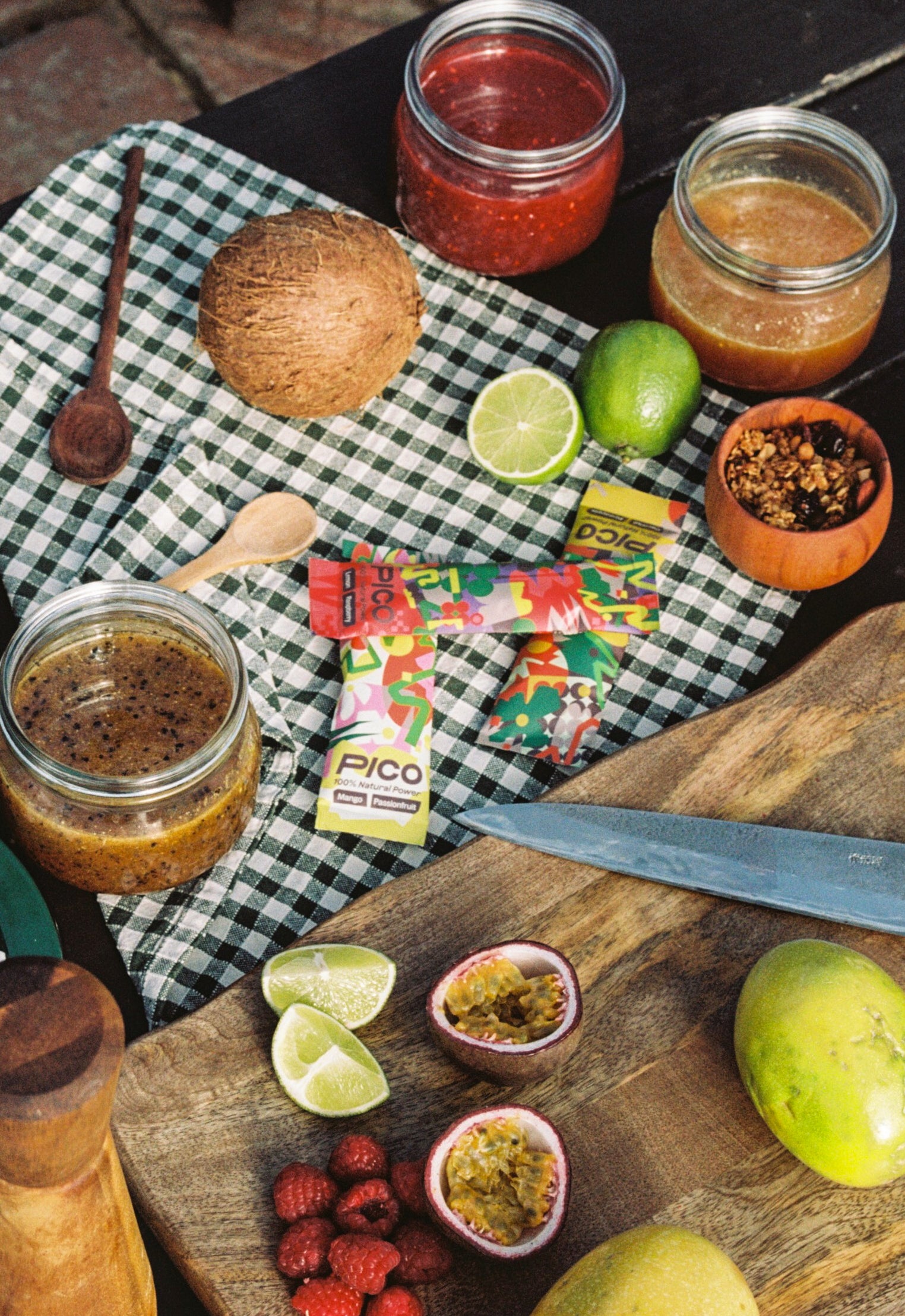
At PICO FUEL we use rice syrup as our carbohydrate base, real fruit for flavour and micronutrients, and sea salt or Himalayan pink salt for electrolytes. No preservatives, no colourings, no artificial flavourings.
Each gel provides between 41 and 47g of carbohydrates in a 2:1 ratio, in a 60g format that's easy to open and take with one hand while pedalling or running.
If you've never tried a gel made with real ingredients, the pack of 12 is the best starting point — three flavours, a reasonable price, and the chance to discover that sports nutrition can actually taste good.