
How to avoid digestive problems in trail running and cycling
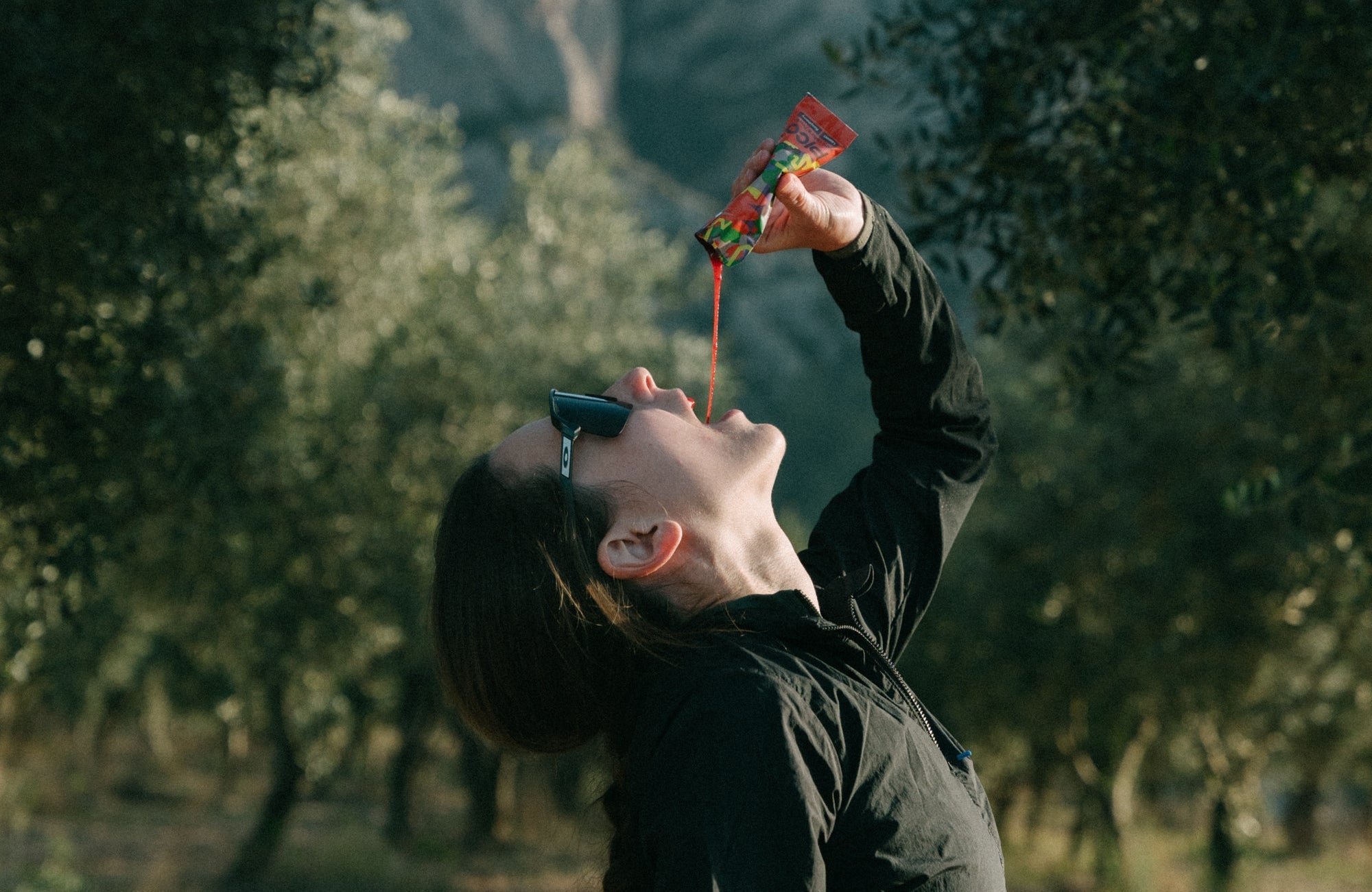
If you've ever had to stop mid-climb because of your stomach, you know exactly what we're talking about. Digestive issues are one of the most common causes of abandonment in trail running and mountain cycling. And most of the time, the culprit isn't the effort — it's what you're eating during it.
Why the digestive system suffers during exercise
When you're cycling or running at high intensity, your body prioritises blood flow to active muscles. The result is that the digestive system receives up to 80% less blood flow than normal. In that state, processing artificial ingredients, preservatives or highly processed carbohydrates becomes very difficult.
Add the mechanical impact of running or the vibrations of MTB riding, and you have the perfect recipe for bloating, nausea or what runners call the “runner's stomach” — having to stop urgently at the worst possible moment.
The 4 most common mistakes in race nutrition
1. Using maltodextrin gels during long efforts
Maltodextrin is the most common carbohydrate in conventional gels. It has an extremely high glycaemic index — higher than pure sugar — which creates sharp spikes and drops in blood glucose. During efforts lasting more than 2 hours, that energy rollercoaster takes its toll, both on performance and digestion.
The natural alternative: gels based on rice syrup and agave syrup, which offer a more gradual and stable energy release, with much better digestive tolerance.
2. Starting to take gels too late
One of the most frequent mistakes, especially in trail running. Waiting until you feel hungry or bonk is arriving too late — muscle glycogen is already low and recovery is slow and costly. The right approach is to start refuelling before you need it.
General guideline: first gel at 30–45 minutes of effort, then every 45–60 minutes depending on intensity.
3. Taking the gel without water
Concentrated gels need water to dilute and absorb correctly in the small intestine. Without enough hydration, they stay in the stomach longer than necessary, ferment and produce gas. In mountain cycling this is made worse because hydration tends to be irregular on technical sections.
Practical rule: always accompany the gel with 150–200 ml of water. Never with isotonic drink — the combination of sugars can saturate intestinal transporters.
4. Ignoring the ingredient label
Preservatives like potassium sorbate or sodium benzoate, artificial colourings and synthetic flavourings are ingredients that the intestine under stress tolerates very poorly. These are the ingredients that make a gel work in the lab but fail at kilometre 35.
Always read the ingredient list. If you can't pronounce something, your intestine probably doesn't know what to do with it either.
Differences between trail running and mountain cycling
Trail running
The constant mechanical impact of running literally shakes the contents of your stomach. That's why more liquid, easy-to-absorb gels work better than denser ones. Texture matters as much as composition.
At long distances (trail marathon, ultra), palate fatigue also comes into play — a gel that tastes great at kilometre 10 can become unbearable at kilometre 50. Variety of flavours isn't a luxury: it's a strategy.
Mountain cycling and road cycling
On a bike, effort is more intermittent — there are descents where energy consumption drops. The challenge is maintaining constant replenishment without overloading the digestive system during high-intensity moments.
In technical MTB, terrain vibrations add mechanical stress to the digestive system. Gels with a high concentration of simple sugars can cause rebound effects in those conditions.
How to choose a gel that won't let you down
Five criteria make the difference between a gel that performs and one that stops you:
- No maltodextrin: choose gels based on natural carbohydrate sources — rice syrup, agave syrup, dates or real fruit.
- 2:1 glucose/fructose ratio: allows absorption of up to 90g of carbohydrates per hour without saturating intestinal transporters. This is the standard for high-performance gels.
- No artificial preservatives: potassium sorbate, sodium benzoate and similar are the first suspects when digestive issues arise.
- Appropriate texture: more liquid for long-distance running, denser tolerable in cycling where there is no impact.
- Recognisable ingredients: if you can't pronounce an ingredient, your intestine probably doesn't know what to do with it.
Why PICO doesn't cause digestive issues
PICO was born precisely from this problem. Its creator — a trained chef and cyclist by vocation — couldn't find a gel that performed well and that he could also recognise the ingredients of.
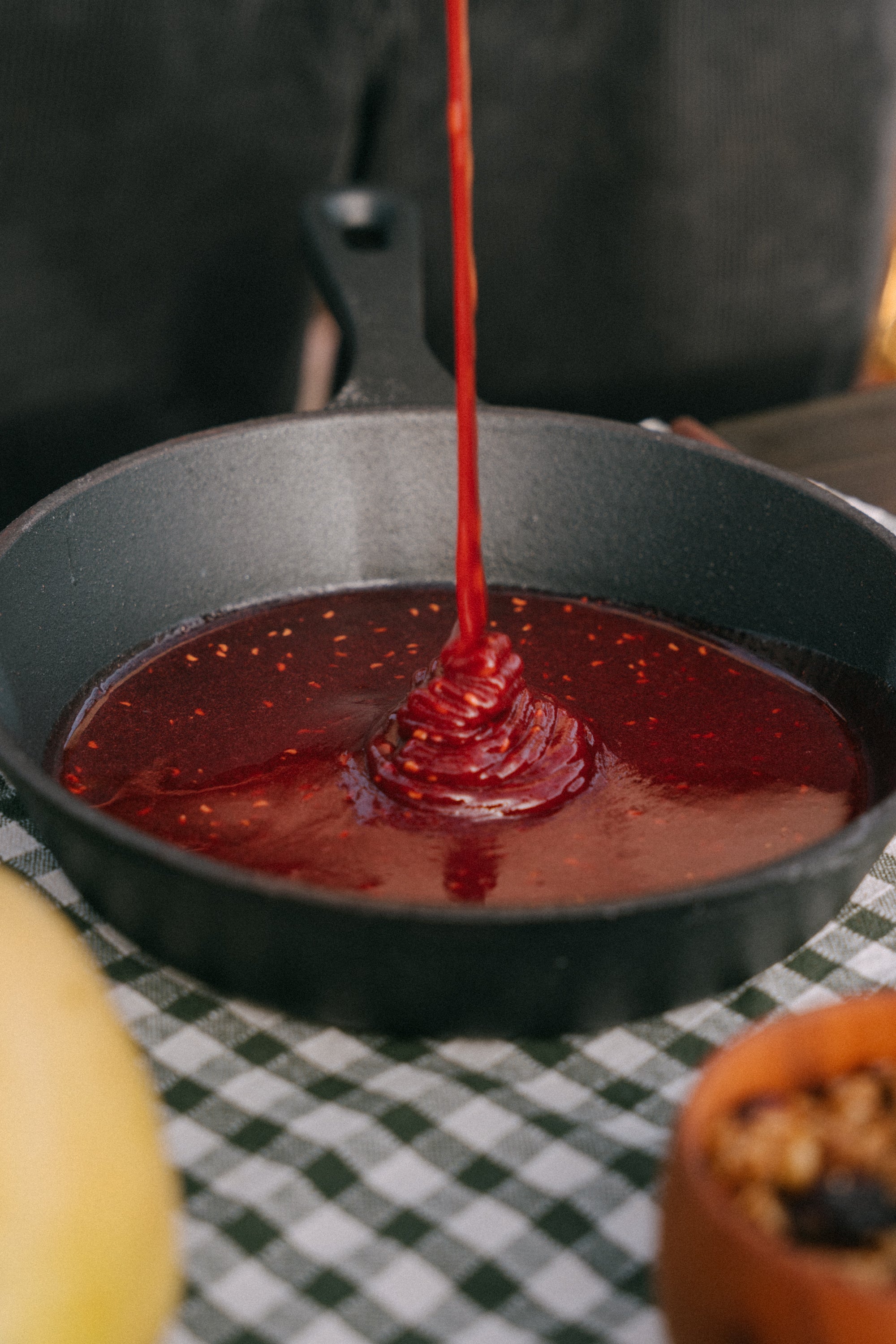
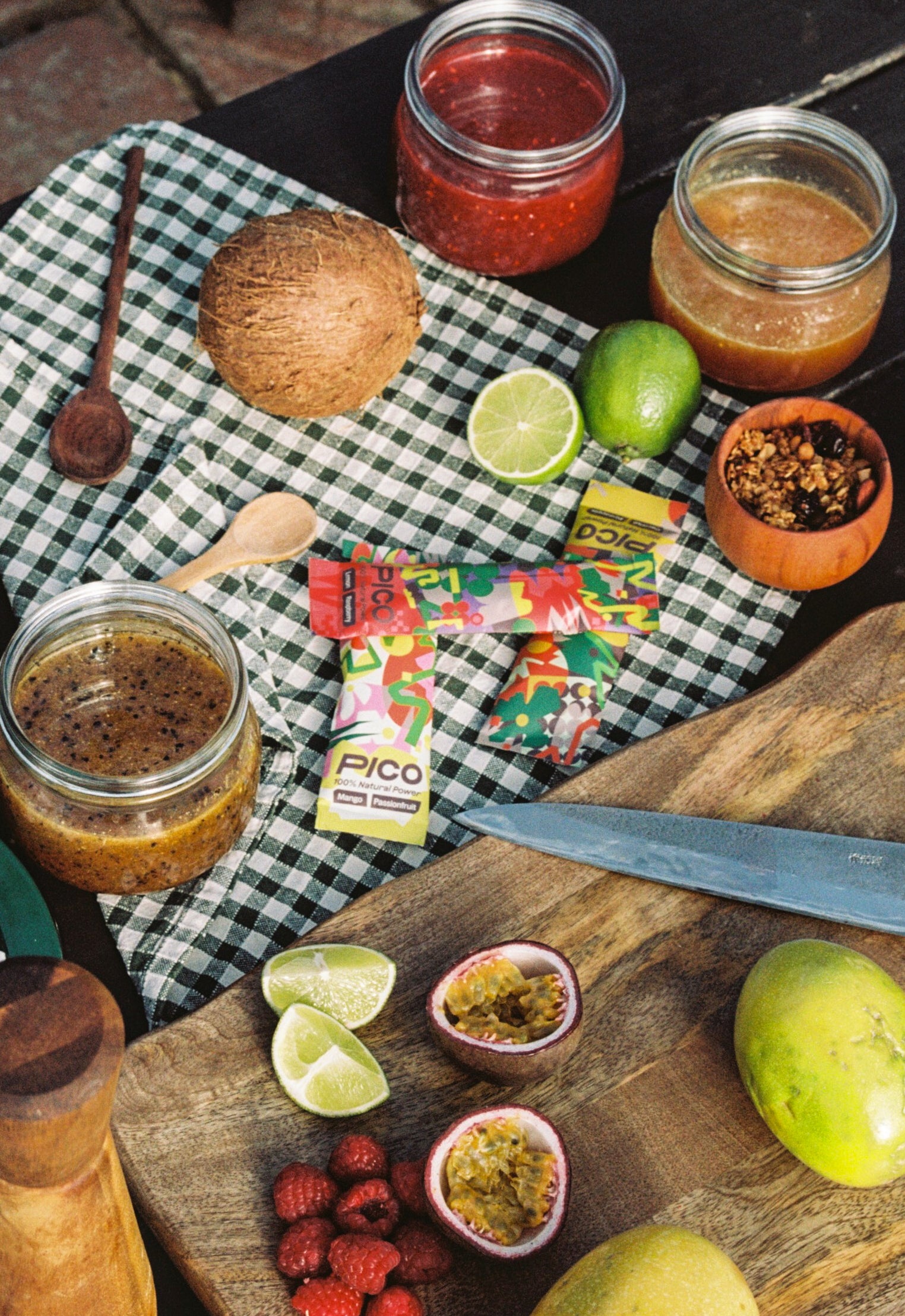
PICO gels are formulated with four ingredients: rice syrup, agave syrup, Himalayan salt and real fruit. No maltodextrin. No preservatives. No artificial flavourings. The result is a gel with a 2:1 ratio, between 41.8g and 47g of carbohydrates per sachet, and digestive tolerance that makes a real difference at the critical moments of a race.
This isn't marketing. It's the direct consequence of using ingredients the body recognises as food.
Nutrition plan for a 3-hour outing
A practical example for trail running or mountain cycling:
- 15 min before: 1 gel to load glycogen at the start.
- Min 45: 1 gel + 200 ml water.
- Min 90: 1 gel + hydration. If effort is very intense, you can add electrolytes.
- Min 135: 1 gel + 200 ml water.
- Min 165: last gel to maintain level until the end.
Total: 5 gels for 3 hours of intense effort. Adjust according to your weight, intensity and heat conditions.
Conclusion
Digestive problems during racing are not inevitable. Most of the time they're preventable by choosing better what you carry in your pocket. A gel with real ingredients, no maltodextrin and a 2:1 ratio isn't a premium option — it's simply what works when your body is at its limit.
Your stomach can't tell one brand from another. But it can tell the difference between real food and a chemical formula.